

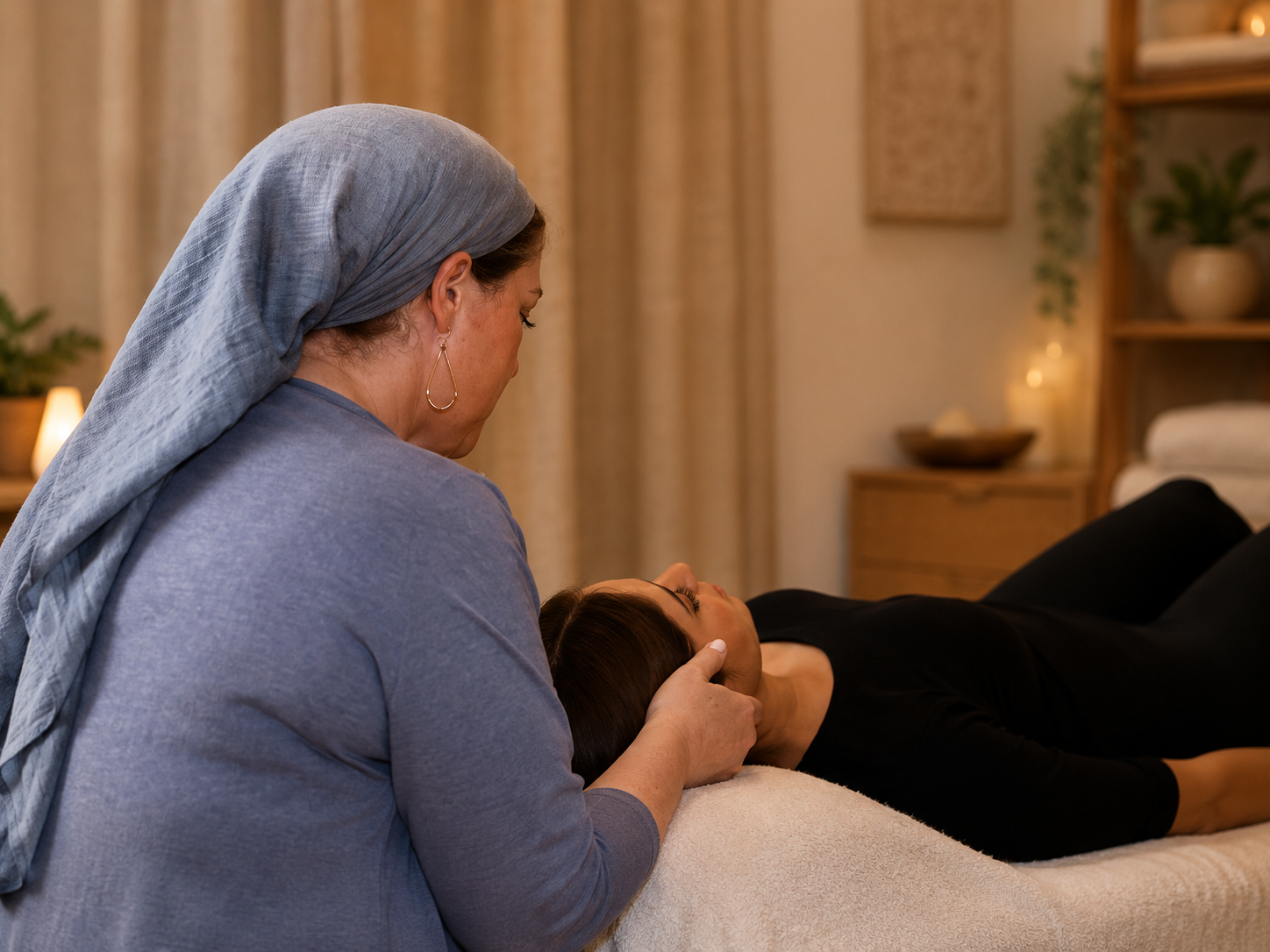
Craniosacral Therapy
Craniosacral therapy (CST) is a gentle, hands-on bodywork method that focuses on the craniosacral system — the membranes and cerebrospinal fluid that surround and protect the brain and spinal cord. Practitioners use light touch (often just a few grams of pressure) to assess and support the rhythmic motion of these structures, helping to release restrictions and improve the functioning of the central nervous system.
How it works
Assessment: The practitioner places their hands on or near the head, neck, and pelvis to sense subtle rhythms and tensions in the craniosacral system.
Release: Through gentle holds, stretches, or micro-movements, the practitioner encourages the membranes, connective tissues, and fluid dynamics to release restrictions.
Integration: As restrictions ease, the nervous system, musculoskeletal system, and surrounding tissues can move toward greater balance and self-regulation.
Common benefits
Pain reduction: People often report less neck and back pain, headaches, and jaw (TMJ) discomfort after CST sessions.
Improved nervous system regulation: CST can help lower sympathetic (“fight or flight”) activity and enhance parasympathetic (“rest and digest”) responses, reducing stress and promoting relaxation.
Fewer and less severe migraines and tension headaches: By easing tension around the head and neck, many clients see a decrease in headache frequency and intensity.
Better sleep: Improved nervous system balance and reduced muscular tension often lead to deeper, more restorative sleep.
Enhanced recovery from trauma and injury: CST may support healing after concussions, whiplash, and other head or spinal injuries by addressing lingering restrictions and improving fluid dynamics.
Improved mobility and reduced muscle tension: Releasing connective tissue restrictions can increase range of motion and reduce chronic tightness.
Support for emotional well-being: Because the craniosacral system interacts closely with the nervous system, some people experience reduced anxiety, emotional release, and a greater sense of calm.
Gentle option for sensitive populations: CST is often used with infants, pregnant people, older adults, and those with chronic illness because of its noninvasive, low-force approach.
What to expect in a session
Environment: Sessions are typically conducted with the client lying fully clothed on a massage table in a quiet, comfortable setting.
Duration: A typical session lasts 30–60 minutes.
Sensations: Clients commonly feel deep relaxation, subtle shifting or warmth, or sometimes an emotional realease.